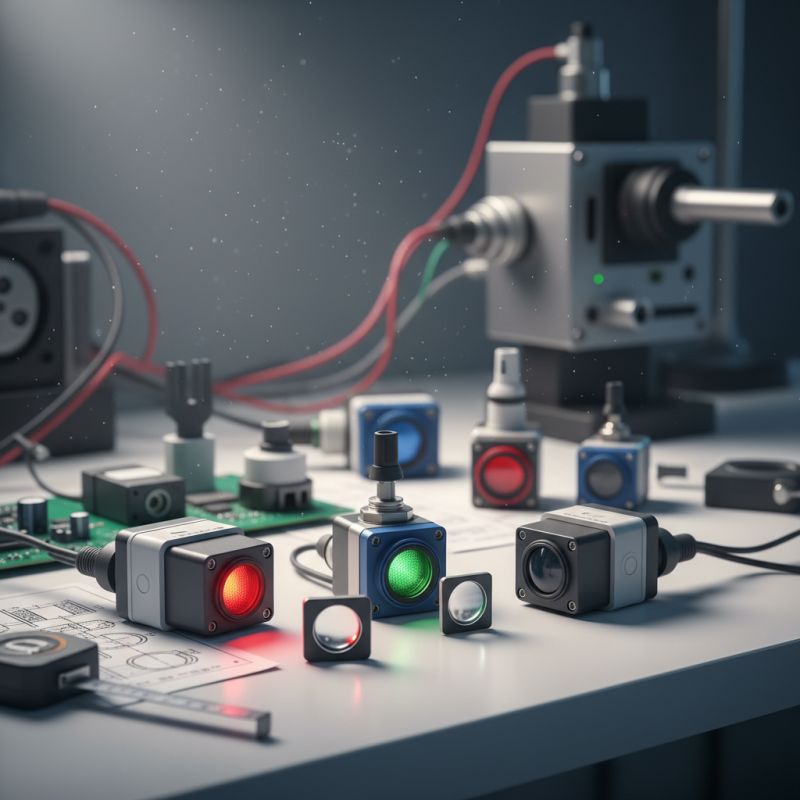
Top Tips for Choosing the Right Photoelectric Sensors?
Choosing the right Photoelectric Sensors can significantly impact your project. These sensors play a crucial role in automation and control systems. They detect objects, measure distance, and gauge levels accurately. However, the vast range of options can be overwhelming.
It's essential to consider specific application needs when selecting photoelectric sensors. Factors like sensing distance and environmental conditions matter. Not all sensors perform well under every circumstance. Imagine working with a sensor that fails in dusty conditions. Sometimes, common features can lead to overlooking important details.
Reflecting on your choices can unveil hidden needs. Are you prioritizing speed over accuracy? What about durability? Each application has unique demands that must be met. A thoughtful approach can help ensure reliable performance in your system.
Understanding Photoelectric Sensors: Types and Applications
Photoelectric sensors play a crucial role in various industries. They detect objects, measure distances, and assess material quality. Understanding the different types of photoelectric sensors is essential for effective use. There are four main categories: retro-reflective, through-beam, diffuse, and specs-style sensors. Each type has its unique applications depending on the environment and requirements.
Retro-reflective sensors are common in packaging industries. They sense the presence of objects without needing direct line of sight.
Through-beam sensors, on the other hand, are excellent for precise detection if a reliable distance is needed. They utilize two components: a light emitter and a receiver.
Diffuse sensors are ideal for short-range detection. However, they can be affected by color and surface texture. Understanding how these factors influence performance can be tricky but important.
Choosing the right sensor involves weighing these details against your needs. Consider factors like distance, speed, and environmental challenges. Testing under real conditions often reveals issues that designs do not address. A photoelectric sensor that works well in one setup might fail in another. Taking the time to evaluate these aspects can lead to better decisions.
Key Factors to Consider When Selecting Photoelectric Sensors
When selecting photoelectric sensors, consider several key factors. The sensing range can vary significantly. For example, some sensors operate effectively up to 10 meters, while others may only reach 1 meter. A good fit for your application is essential.
Another important factor is the environment where the sensors will be used. Harsh conditions can impact sensor performance. High temperatures, dust, and humidity are critical to assess. Industry reports indicate that 30% of sensor failures occur due to unsuitable environmental conditions.
Tip: Assess your installation environment before making a decision.
The type of sensing technology also matters. Through-beam sensors can detect objects at long distances, while proximity sensors are excellent for close-range detection. Industry experts recommend evaluating the required response time for your application as well. A high-speed response could be necessary in automated systems.
Tip: Don't overlook sensor mounting options. Complicated installations can lead to maintenance issues.
Carefully weigh these factors. They will guide you towards making the right choice for your application. A poor decision could impact productivity and increase costs.
Evaluating Sensor Performance: Sensitivity, Range, and Response Time
When selecting photoelectric sensors, evaluating their performance is crucial. Key factors include sensitivity, range, and response time. Sensitivity determines how well a sensor detects low levels of light. A highly sensitive sensor can spot even the faintest signals. This can be especially important in low-light conditions, where visibility is reduced.
Range is also vital. It indicates how far a sensor can effectively detect objects. A sensor with a longer range can be beneficial in large areas. However, it might compromise sensitivity at greater distances. Balance is essential here. Consider test scenarios to evaluate this balance.
Response time measures how quickly a sensor reacts to changes. Quick response times are necessary for dynamic environments. Delays can lead to missed detections, which may affect overall performance. Always compare specifications, but real-world tests offer better insights.
Tips: Always check the environment where sensors will be used. Different conditions can impact performance. Don't overlook installation angles; sometimes, a slight adjustment can optimize function. Test multiple sensors side by side. Observing their reactions can reveal strengths and weaknesses.
Environmental Considerations for Photoelectric Sensor Selection
When selecting photoelectric sensors, environmental factors play a crucial role. The operating environment directly impacts sensor performance. For instance, dust or dirt can obstruct the sensor's light path. This blockage may lead to false readings. Consider the installation location carefully. Areas with heavy dust or moisture require specialized sensors.
Temperature is another key factor. Extreme heat or cold can affect the sensor's sensitivity. Some sensors may fail entirely under harsh conditions. Understanding these limits is essential for reliable operation. Evaluate the temperature range of the sensor. Ensure it aligns with your specific environment.
Additionally, consider potential interference from ambient light. In brightly lit areas, sensors may struggle to function correctly. Some models include features to minimize this interference. Explore options that provide enhanced filtering capabilities. This can guide your decision-making. While it's tempting to choose based on price, always weigh the environmental suitability of each option.
Top Tips for Choosing the Right Photoelectric Sensors
| Criteria | Description | Environmental Considerations | Recommended Sensor Type |
| Operating Distance | Distance the sensor can detect an object | Consider light conditions, dust, and fog | Laser Sensors |
| Ambient Temperature | Temperature range within which the sensor operates | Ensure sensor is rated for extreme temperatures | Infrared Sensors |
| Chemical Resistance | Resistance to environmental chemicals | Check for exposure to chemicals in the environment | Specialty Sensors |
| Mounting Type | How and where the sensor is mounted | Consider vibration, shock, and accessibility | Compact Sensors |
| Sensor Type | Type of technology used for detection | Suitability for application and environment | Photoelectric Sensors |
Integration and Compatibility with Existing Systems
When considering photoelectric sensors, integration is crucial. You want sensors that fit seamlessly with what you already have. Compatibility issues can lead to frustration and increased costs. It's essential to evaluate your current systems before making a decision. Assess the communication protocols and the voltage levels used. This step can save time and effort during installation.
A tip is to ask about the sensor’s adaptability to future needs. Flexibility is key in a rapidly changing environment. Choose sensors that can be easily upgraded or modified. This ensures your investment continues to serve you well as technology advances.
Also, don't overlook mounting options and physical space. Some sensors may require more room than available. Consider how these sensors will blend into your setup. An awkward fit can hinder performance. Keep in mind that an ideal sensor should transmit clear signals in your unique setup. Being thorough in your evaluation process is essential for overall success.
Top Tips for Choosing the Right Photoelectric Sensors: Integration and Compatibility with Existing Systems