How to Choose the Right Welded Wire Mesh for Your Projects?
When selecting the right welded wire mesh for your projects, several factors play a crucial role. The global welded wire mesh market is projected to grow at a CAGR of 7.6% from 2021 to 2028, indicating its increasing importance in various industries. This durable product is widely used in construction, agriculture, and even aquaculture. Its versatility makes it an essential material for many applications.
Choosing the appropriate welded wire mesh involves considering the wire gauge, mesh opening, and coating type. For instance, a thicker gauge provides higher strength but adds weight. Moreover, the mesh opening affects material flow and visibility. Understanding how these variables influence your project can lead to better decision-making. It's essential to reflect on the specific needs of your project and the limitations of different welded wire mesh options.
Sometimes, the selection process can be overwhelming. Misjudging your requirements might lead to unnecessary expenses or project delays. Not all types of welded wire mesh serve the same purpose, and each comes with its pros and cons. Thoughtful consideration and research are needed to avoid pitfalls in your choice, ensuring the mesh you select truly meets your project's demands.
Understanding Welded Wire Mesh: Types and Materials
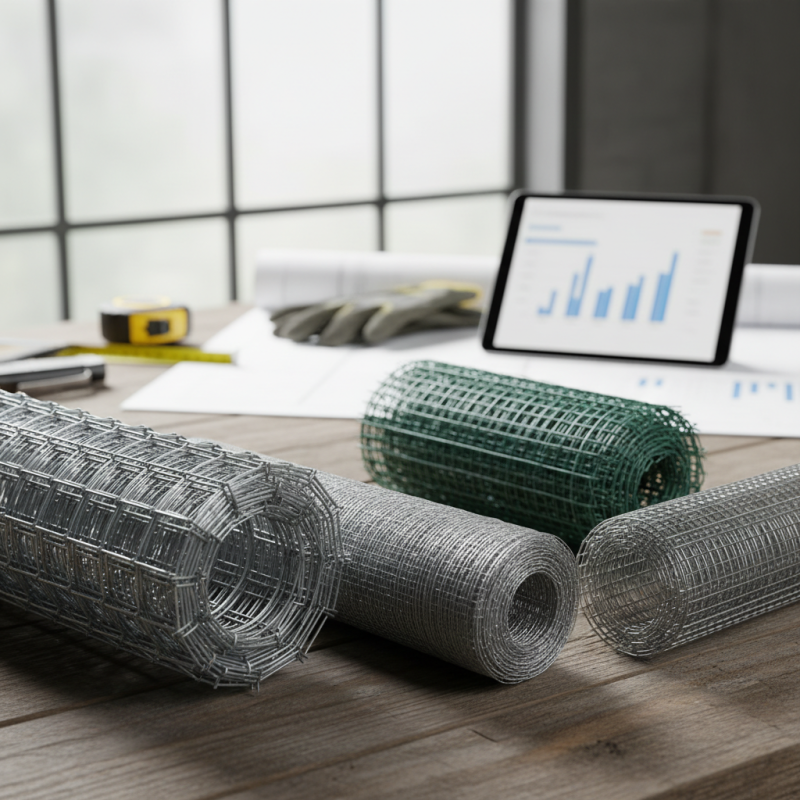
Welded wire mesh is a versatile material used in various projects, from construction to gardening. Understanding its types and materials is crucial. It mainly comes in two types: galvanized and stainless steel. Galvanized mesh has a protective zinc coating, which prevents rust and corrosion. This makes it suitable for outdoor uses. Stainless steel mesh, on the other hand, is stronger and more resistant to harsh conditions. It is ideal for applications requiring high durability.
When choosing welded wire mesh, consider the gauge and spacing of the wires. A thicker gauge means stronger mesh, but it may be heavier and harder to handle. Wire spacing impacts visibility and structure integrity. Different projects may require different spacing; for example, tighter spacing is needed for small animals, while wider spacing suits larger animals.
However, not all projects fit neatly into one category. A welded wire mesh may not always perform as expected. Factors such as environmental conditions and load-bearing requirements can vary. It’s essential to assess your specific needs carefully. Incorrect choices can lead to underperformance. Research and, if necessary, consult with experts to avoid costly mistakes.
Key Factors to Consider When Choosing Welded Wire Mesh
Choosing the right welded wire mesh can be challenging. Several key factors will impact your decision-making process. Consider the mesh size. Small openings can provide better containment for smaller animals. However, larger openings may be necessary for ventilation or drainage.
Material quality matters deeply. Opt for materials that resist corrosion, especially in outdoor projects. Steel mesh can be strong but might rust over time. Aluminum options are lighter but may not be as durable. Think about the environment where you will use the mesh. Will it face extreme weather? Adapt your choice accordingly.
**Tips**: Always check the thickness of the wires. Thicker wires typically offer more strength. Additionally, if your project involves bending the mesh, ensure your selected mesh can withstand it without breaking. Analyze your project’s specific needs. A mismatch can lead to costly errors.
Be mindful of installation methods, too. Some welds can weaken during installation. Taking your time during this phase can save you future headaches. Ultimately, consult with professionals if you're unsure.
Applications of Welded Wire Mesh in Various Industries
Welded wire mesh has diverse applications across various industries. Its versatility makes it suitable for construction, agriculture, and even landscaping. In construction, builders use it for reinforcing concrete and providing structural support. It helps create strong foundations and walls. In agriculture, farmers utilize welded wire mesh for fencing. This keeps livestock secure and protects crops from pests.
When choosing welded wire mesh, consider the gauge and spacing. Thicker wires offer strength but can be heavier to work with. Smaller openings prevent animals from getting through, but larger openings allow better airflow. This is crucial for greenhouse applications.
Tips: Always assess your project's specific needs. For outdoor use, consider corrosion-resistant options. Test the mesh's strength to ensure it withstands local weather. Make sure it meets safety regulations for your area.
Remember, the right welded wire can make or break your project. Be thoughtful in your selection.
Evaluating Quality and Durability of Welded Wire Mesh Options
Choosing the right welded wire mesh is crucial for any project. Evaluating quality and durability ensures you get the best performance. According to industry reports, high-quality welded wire mesh can last over 30 years in outdoor environments. Look for materials resistant to rust and corrosion, as these factors significantly impact longevity.
Tips: Check the wire thickness. A thicker wire generally indicates better strength. Common thicknesses range from 14 to 6 gauge, with lower numbers signifying thicker wire. Always consider your project's specific needs.
Inspect manufacturing processes as well. Automated welding and precise spacing enhance durability. A report from the American Society of Civil Engineers notes that consistency in mesh size is vital for structural integrity. Imperfections in mesh can lead to weak points. It's crucial to address these potential flaws before starting any project. Evaluate your options thoroughly to avoid future issues.
Installation Tips and Best Practices for Welded Wire Mesh Projects
When working with welded wire mesh, installation plays a crucial role in achieving the best results. Proper preparation is key. Ensure the surface is clean and level before installing. If the ground is uneven, it can lead to instability and misalignment. A good foundation prevents future issues.
Choose your tools wisely. High-quality wire cutters and pliers are essential for accurate measurements and cuts. Rushing this process often results in uneven panels. Take the time to measure twice and cut once. This avoids wastage and frustration later.
Pay attention to fastening methods. Use appropriate connectors for your project. Some applications might require additional supports for strength. Not considering this aspect can compromise the integrity of the structure. Always review your work to identify areas for improvement. A careful approach ultimately leads to a successful installation.