
14, Raghava Enclave, Transport Road, Secunderabad, Hyderabad (500009)
©2024 All Rights Reserved by excitechrobot.com
Choosing Autonomous Mobile Robots for a warehouse requires more than comparing speeds, payloads, and software screenshots. The decision should reflect real operating conditions, including aisle widths, floor quality, shelf locations, order volumes, and human traffic. A robot that performs well in a demonstration may struggle beside a crowded packing station. Small details matter. Observe the busiest shift. Measure turning spaces. Record walking distances and recurring delays. These practical observations provide stronger evidence than promotional claims. Warehouse managers, maintenance technicians, and operators should all contribute to the evaluation. Their daily experience often reveals risks that a specification sheet misses.
A reliable selection process examines navigation accuracy, battery performance, charging methods, safety features, fleet management, and integration with warehouse systems. Ask vendors for documented performance data from facilities with similar workflows. Request a controlled pilot, not only a guided tour. Track completed missions, intervention frequency, downtime, and operator feedback. Total cost should include installation, training, maintenance, software updates, and possible layout changes. Early productivity estimates can be wrong. No checklist is perfect. Conditions change during peak seasons, and human behavior is difficult to model. A thoughtful decision therefore combines measurable results with cautious judgment. This guide explains how to compare Autonomous Mobile Robots, identify practical limitations, and build a selection strategy that remains dependable as warehouse demands evolve.
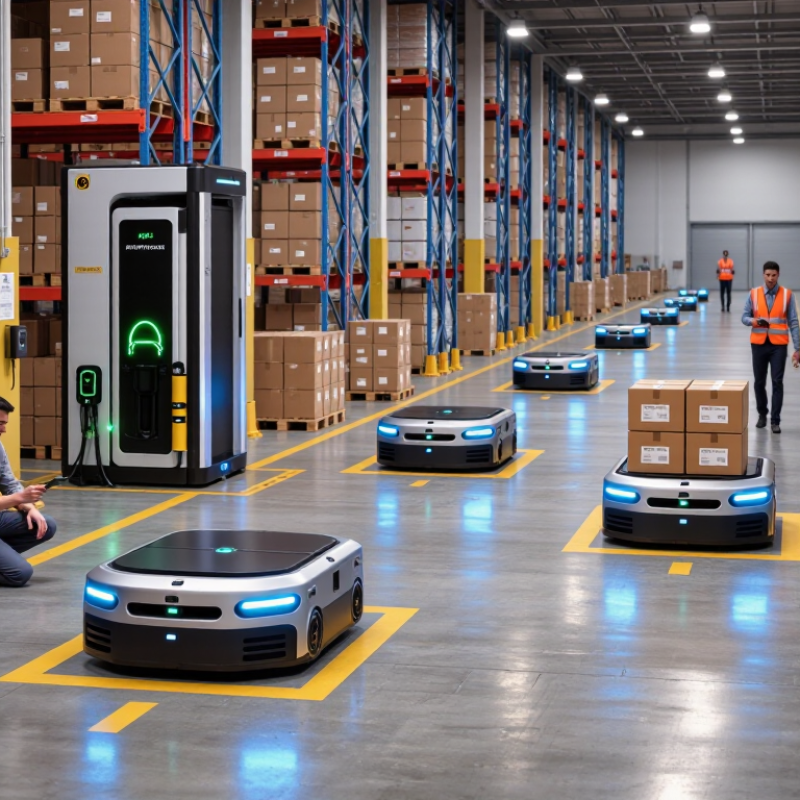
Before selecting autonomous mobile robots, document the work they must perform. Walk the warehouse during every shift, not only during a quiet morning. Record pallet weights, load dimensions, pickup heights, travel distances, and delivery points. Measure aisle widths carefully, including turning areas and emergency access routes. A robot may fit an empty aisle but fail when pallets lean into its path.
Operating conditions matter just as much. Check floor flatness, ramps, joints, dust, lighting, and temperature changes. Note Wi-Fi coverage near metal racks, cold rooms, and loading doors. Observe pedestrian traffic, forklifts, queues, and temporary storage. These details reveal whether robots need stronger obstacle detection, weather protection, or different navigation methods. Keep safety procedures aligned with local requirements and site risk assessments.
Use real process data instead of optimistic estimates. Count missions by hour, measure loading delays, and identify peak periods. Include the heaviest normal load, not just the average one. During assessments, teams sometimes overlook battery charging space or blocked routes during maintenance. That mistake is expensive. A neat spreadsheet can still miss human habits, such as leaving carts beside a fire exit. Test a small route with representative loads and workers nearby. Expect revisions. Warehouse conditions rarely stay perfectly controlled.
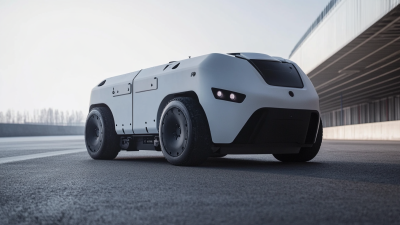
Choosing an autonomous mobile robot starts with the warehouse task, not the machine’s appearance. A tugger robot suits repeated movement of loaded carts between storage and production areas. Unit-load robots carry pallets or containers directly, making them useful near receiving and dispatch zones. Shelf-to-person models bring inventory to operators, reducing walking during order picking. Hybrid systems can handle carts and shelves, but their flexibility may increase setup complexity. Pick the workflow first.
Core capabilities deserve close comparison. Check payload capacity, turning radius, travel speed, and performance on ramps or uneven floors. Narrow aisles demand accurate positioning and reliable obstacle detection. Laser-based navigation can map changing routes, while vision systems help recognize people, pallets, and floor markings. Safety is non-negotiable. Look for speed control, emergency stops, protective sensors, and safe behavior around blind corners.
Fleet software should coordinate traffic, assign missions, and connect with warehouse management systems. It should also provide useful data, such as charging time, idle periods, and completed tasks. During a pilot, measure actual throughput, not brochure estimates. A robot may perform well on a clean test route but struggle near temporary pallets or crowded packing stations. That happens. I would test peak shifts, low battery conditions, and manual intervention procedures. Maintenance access matters too. If technicians need excessive downtime for a simple wheel or sensor issue, operating costs can rise quickly. Choose based on observed reliability, worker interaction, and the warehouse’s less-than-perfect daily conditions.
Comparison of common autonomous mobile robot types by typical payload capacity and operating speed.
Tote and shelf-carrying robots are generally suited to piece-picking and goods-to-person workflows, while pallet and tugger robots are designed for heavier loads and longer-distance transport. The figures represent typical industry operating ranges; actual performance depends on configuration, safety limits, floor conditions, and warehouse layout.
Choosing an autonomous mobile robot starts with the warehouse, not the brochure. MHI’s 2024 Annual Industry Report found that 37% of supply chain leaders expected to adopt robotics within two years. That forecast raises a practical question: can the robot navigate your actual aisles?
Test navigation during peak traffic, dim lighting, temporary storage, and blocked routes. A reliable system should combine accurate localization with obstacle detection and controlled rerouting. Record failed turns, stopping distances, and recovery time. These details matter more than a smooth demonstration.
The test should include pedestrians, forklifts, narrow crossings, and changing pallet positions. I would also repeat it after rearranging shelves. Performance can decline when maps become outdated.
Safety requires more than emergency buttons. ISO 3691-4 provides safety requirements for driverless industrial trucks, including protective functions and operating zones. Ask how the system limits speed near people and verifies safe separation. Fleet management deserves equal attention. The system should show battery status, task queues, congestion, software alerts, and route history on one operational dashboard. Interact Analysis reported strong growth in the mobile robotics market, but adoption alone does not guarantee control. Start with measurable service targets, such as completed missions per hour and recovery minutes per shift. No scorecard is perfect. Human review remains necessary, especially when exceptions become routine.
A warehouse robot should fit your existing operation, not force every process to change. Integration starts with data. Check whether it can exchange orders, inventory updates, and task status with your warehouse system. Test connection recovery during a network outage. A smooth demonstration proves little. In one pilot, delayed status messages created duplicate assignments near the packing area. The lesson was practical: map exceptions before approving hardware. Ask operators to test barcode scans, blocked aisles, and urgent priority changes. Their observations often reveal gaps that software documents miss. Keep interfaces documented and access controlled.
Scalability depends on more than adding units. Measure traffic density, charging capacity, floor space, and supervisor workload. A small fleet may perform well at 2,000 daily moves, then struggle during seasonal peaks. Model those peaks before signing a long contract. Use modular workflows, clear fleet rules, and measurable service targets. New robots should join without redesigning routes or stopping production. Growth can expose weak assumptions. A charging area sized for ten units may become a bottleneck for thirty. Leave physical and digital capacity where possible.
Maintenance deserves the same scrutiny as throughput. Review battery intervals, spare-part availability, diagnostic tools, and technician training. Ask who responds at 2 a.m. A repair plan without response times is only a promise. Track minor faults, not just breakdowns. Repeated sensor cleaning may signal unsuitable floors or poor traffic controls. Inspect service logs monthly and revise schedules from real usage. I would also budget for downtime during software updates. Early estimates are often optimistic.
Choosing autonomous mobile robots for warehouses requires more than comparing purchase prices. Calculate the total cost across five years. Include hardware, software, installation, training, maintenance, batteries, and integration work. A low quotation can hide expensive process changes.
Measure the baseline first. Record walking time, picking errors, labor hours, order volume, and peak-season delays. These figures create a defensible investment model.
Performance gains should be tested in the actual warehouse, not only in a demonstration area.
Run a controlled pilot with representative shelves, narrow aisles, uneven workloads, and real order profiles. Track completed tasks per hour, travel distance, system uptime, collision alerts, and worker acceptance.
A practical target might be reducing internal travel by 30 percent without increasing errors.
Avoid optimistic assumptions. Reality is messier. One site may gain speed while another needs layout changes before automation delivers value.
Use a simple return-on-investment calculation: annual measurable benefit minus annual operating cost, divided by total initial investment.
Include benefits from fewer picking errors, faster replenishment, improved space usage, and reduced overtime.
Assign cautious values to benefits that are difficult to verify. Sensitivity testing is essential. What happens if order volume falls 15 percent or maintenance costs rise?
Speak with warehouse engineers and operators who have managed similar deployments. Their experience often reveals overlooked costs, such as charging-space requirements, network upgrades, and retraining during shift changes.
Choose the system that performs reliably under your constraints, not the one with the most impressive brochure.