
China Top Used Robots for Sale Where to Buy?

China’s used-robot market offers options for manufacturers seeking capable equipment without the price of a new system. But “Where to buy?” is only the start. Buyers must also ask what the robot has done, how it was maintained, and whether it fits the production line.

Joseph Engelberger, a robotics pioneer, is often credited with saying, “I can’t define a robot, but I know one when I see one.” With Used Robots, seeing is not enough. A polished arm may still have worn joints, outdated controls, or missing service records. Request the model and serial number, operating hours, controller details, maintenance history, and a live demonstration. Ask the seller to run a repeatable cycle, not just move the arm once.

Check established industrial-equipment dealers, robot integrators, and specialist refurbishment companies in China. Compare their inspection reports, warranty terms, spare-parts support, and shipping arrangements. Verify that the seller can document the equipment’s condition and explain what refurbishment included. A video helps. It does not replace an independent inspection when the purchase is significant.

Some listings look convincing. Details can still be thin. I would not treat a low price as proof of a bargain. This guide explores where to search, what questions to ask, and how to compare offers before committing. Even careful buyers can miss a costly detail; that deserves a second look.
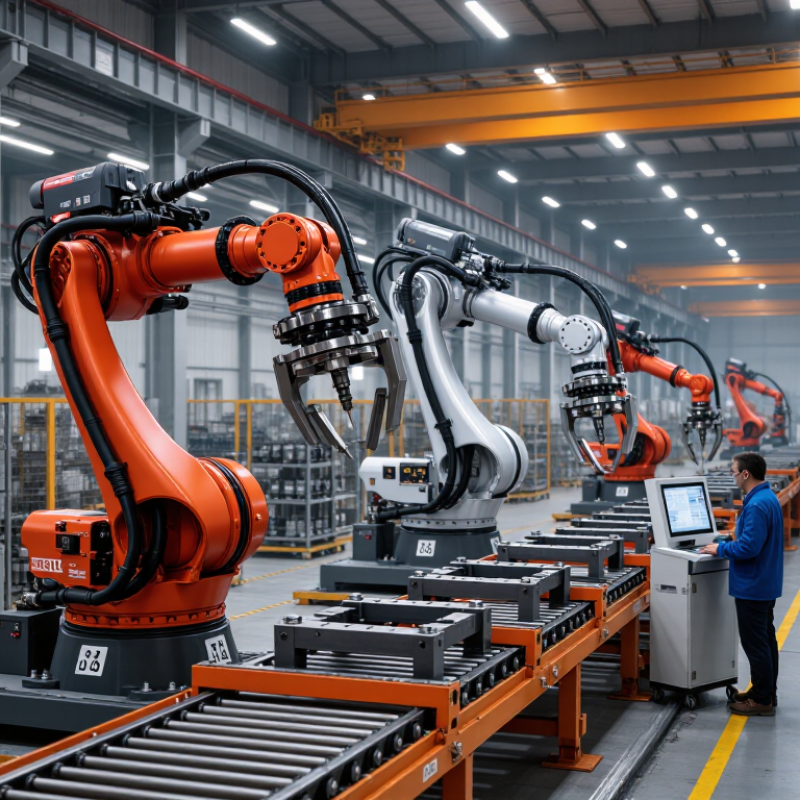
China Top Used Robots for Sale Where to Buy?

Understanding China’s Used Industrial Robot Market

China’s used industrial robot market is shaped by a large installed base and steady factory demand. The International Federation of Robotics’ World Robotics 2024 report recorded 276,288 new industrial robot installations in China during 2023, about 51% of global installations. China’s operating stock reached roughly 1.76 million units. These figures describe new installations and installed robots, not used-market sales. Still, they help explain why buyers can find machines across many ages and applications.

Condition matters more than a low listing price. Ask for maintenance records, operating hours, controller backups, and details of any repairs. Inspect the robot under load, not only while it moves slowly in a showroom. Check joint noise, cable wear, brake performance, and repeatability. A tidy repaint proves little. A well-documented older unit may be a better fit than a newer machine with an unclear history. Even careful checks have limits.

Buyers commonly compare specialist resellers, factory surplus sales, and industrial equipment auctions. Request a live test with the intended tool and workpiece, and confirm what the quoted price includes. Transport, installation, safety equipment, and programming can change the real cost substantially. Verify ownership records and export or import paperwork before payment. Used robots can lower entry costs, but integration time is often underestimated.
Common Types of Used Robots Available for Sale

Used robots for sale come in several practical types, each suited to a different workspace. Articulated six-axis arms follow varied paths, such as tending a machine or moving parts between trays. SCARA robots suit quick, horizontal pick-and-place tasks. Cartesian models travel along straight axes and can handle simple packaging or loading. Delta robots are often chosen for sorting lightweight items at speed.

Collaborative robots can support lighter assembly and inspection, but check the safety features on the exact unit. Older palletizing robots may move heavy cartons, though they need ample floor space and a compatible controller. Condition matters as much as type. Inspect joint play, cable wear, alarms, repeatability, and maintenance records. Ask for a demonstration with a realistic payload. A video alone may not reveal much.

Tips: Match the robot to payload, reach, cycle time, and mounting position. Confirm the controller, teach pendant, and software are included, and check parts availability. Measure your work cell before delivery. Even a tidy listing may leave one detail unclear, so ask questions before committing.

Common Types of Used Robots Available for Sale

Typical Degrees of Freedom by Robot Type

Used industrial robots are commonly found in Cartesian, SCARA, articulated, delta, and collaborative configurations. The chart shows representative degrees of freedom; actual configurations vary by model and application.

How to Assess a Used Robot’s Condition and Performance

When comparing used-robot suppliers in China, assess condition before focusing on price. Start with the machine’s work history. Ask for operating hours, maintenance records, fault logs, and details of previous applications. Missing paperwork deserves caution, but it does not prove the robot is unreliable. Look closely.

Inspect joints for unusual play, leaks, corrosion, or fresh repairs that may conceal wear. Move each axis slowly, then run the same path several times. Watch for vibration, uneven motion, position drift, and error messages. Test with a representative load; an unloaded demonstration may hide weak brakes or overheating. Small differences matter.

Check the controller, teach pendant keys, cables, connectors, and safety functions. Compare cycle time and positioning repeatability with the needs of your actual task. Request a cold start and a longer run, since some faults appear only after warm-up. When possible, ask an independent technician to review the inspection and service records. Choose a seller who allows practical testing and provides clear documentation and return terms. Even careful checks leave uncertainty, so allow room in your budget for setup, replacement parts, and unexpected repairs.

Where to Buy Used Robots in China

Where to Buy Used Robots in China

In China, used robots are commonly found through industrial equipment marketplaces, specialist refurbishers, factory liquidation sales, and direct purchases from manufacturers upgrading production lines. The International Federation of Robotics reported 276,288 new industrial robot installations in China in 2023, in its World Robotics 2024 report. That large installed base creates potential sources, but it does not guarantee a well-maintained second-hand unit. Ask sellers for the robot’s model, year, operating hours, service records, and a live demonstration. A workshop floor can reveal more than polished listing photos.

Compare at least three suppliers. Request close-up images of cables, joints, controllers, and the base; worn cable jackets or unusual joint noise deserve a closer look. Confirm what is included, such as the controller, teach pendant, cables, and safety equipment. Ask for a written test procedure and clear terms for inspection, delivery, and after-sales support. Even careful checks miss things. A local technician can assess the unit before payment, especially when records are incomplete.

Tips: Prefer sellers who allow an on-site test under load. Record the serial information and test results in writing. If the price seems unusually low, pause and investigate; a cheap robot may need costly repairs or missing components.

Steps for Completing a Secure Used Robot Purchase

A secure used-robot purchase starts with checking who owns the machine and whether the seller can document its history. Request the model details, serial number, operating hours, maintenance records, and a clear list of included parts. Ask for proof. Compare the records with the robot and control cabinet in person or over a live video call. A polished photo is not an inspection.

Before payment, arrange an independent technical check when possible. Watch the robot complete a real cycle, not just a brief power-on. Test movement, emergency stops, guards, cables, and the teach pendant. Test it live. Ask the seller to demonstrate any reported repairs, and note faults, unusual noise, or missing components. Maintenance logs may be incomplete; that is a reason to ask more questions, not assume the worst.

Put the agreed condition, price, payment schedule, delivery method, and acceptance checks in a signed purchase document. Use a traceable payment method and confirm the recipient’s details directly. Keep everything in writing. Photograph the machine before loading, record its serial number, and confirm who handles packaging, freight, and transit damage. Small details get missed, even by experienced buyers, so leave time to review the paperwork before funds move.