China Best Robot Simulation Manufacturers for Global Buyers?

China has become a major sourcing base for Robot Simulation systems used by factories, universities, and engineering teams worldwide. Its manufacturers offer simulation software, digital twins, robot programming tools, and hardware-in-the-loop platforms. Prices can be competitive. Capabilities vary widely.

A serious buyer should look beyond attractive demonstrations. Check support for ROS, PLC integration, CAD import, collision detection, sensor modeling, and real-time control. Ask for test records, update policies, and customer references. A virtual welding cell should reproduce torch paths, cycle times, and safety zones. A warehouse model should reflect changing loads, lighting, and floor conditions. These details expose whether a platform is practical or merely impressive.

Robotics professor Dr. Ken Goldberg has said, “The robot is not going to take your job, but the person who knows how to use a robot will.” His observation also applies to simulation. Skilled users can turn virtual models into safer deployment decisions, while poorly trained teams may trust attractive but inaccurate results. China’s strongest manufacturers combine engineering depth with training, documentation, and responsive service. Global buyers should compare validation methods, cybersecurity controls, localization, and long-term maintenance. Supplier communication matters, especially across time zones and technical languages.

No supplier is perfect. Some platforms may have limited documentation or uneven third-party compatibility. That weakness should be discussed openly. A careful evaluation can reveal it early. This guide examines leading Chinese Robot Simulation manufacturers through performance, reliability, support quality, customization, and global purchasing experience. The goal is not to praise every vendor. It is to identify dependable partners for real production challenges.
China Best Robot Simulation Manufacturers for Global Buyers?

What Is Robot Simulation and Why Does It Matter in China?

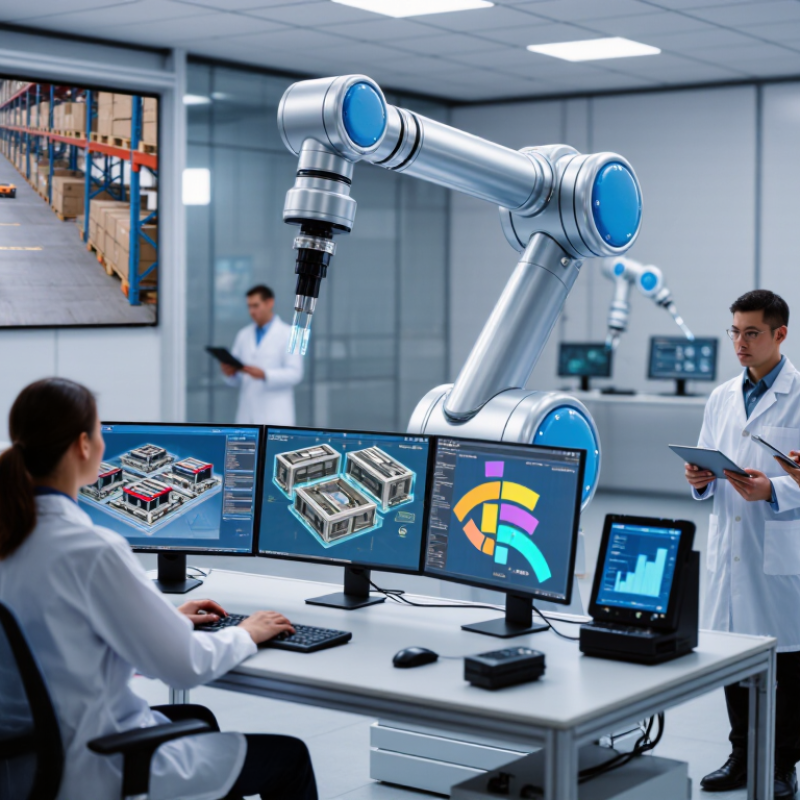
Robot simulation is a digital method for testing robot movements before physical installation. In China’s manufacturing sector, it supports design, programming, and production planning. Engineers can model a robot arm, gripper, conveyor, and workspace on one screen. They can then check reach, collision risks, cycle time, and operator access. This reduces expensive trial work on the factory floor.

For global buyers, simulation matters because factory projects often involve different layouts, products, and technical requirements. A reliable simulation can show whether a robot reaches a welding point or picks parts from a moving line. It can also support virtual commissioning before equipment arrives. Experienced engineering teams compare simulated results with physical tests. They measure actual cycle times, tool paths, and positioning errors. Data matters more than attractive animation.

Simulation is not magic. I have seen models look perfect while ignoring cable movement, fixture tolerances, or real material variation. That weakness deserves attention. Buyers should request clear assumptions, editable models, test records, and practical validation methods. Chinese manufacturers with strong simulation capabilities usually connect software knowledge with hands-on integration experience. They understand that a small layout change can affect safety, maintenance, and output. The best technical partner explains limits honestly, documents decisions, and adjusts the model when factory conditions change. A useful simulation should make production more predictable, not merely more impressive.

Key Technologies Used by China’s Robot Simulation Manufacturers

China’s robot simulation manufacturers increasingly build digital twins before equipment reaches the factory floor. Physics engines model gravity, friction, payload, and collision risks. Virtual controllers then test motion paths against real cycle times. This matters because IFR’s World Robotics 2024 report recorded 276,288 industrial robot installations in China during 2023, representing about 51% of global installations.

Data integration is another key technology. Simulation platforms connect CAD files, PLC signals, machine vision, and production databases through industrial communication standards. Engineers can adjust a virtual gripper, replay sensor faults, and estimate downtime before commissioning. IFR also reported China’s robot density at 470 robots per 10,000 manufacturing employees in 2023. That scale increases the value of repeatable virtual testing, especially for automotive, electronics, and logistics projects.

Artificial intelligence now improves path planning and synthetic-data generation. A virtual camera can produce thousands of lighting and occlusion variations for inspection training. Reinforcement learning can refine difficult movements, although results still require physical validation. A simulation may look perfect on a monitor. Dust, cable drag, and human hesitation can expose weaknesses. Professional buyers should therefore request traceable test records, hardware-in-the-loop trials, and measurable accuracy data. The China Robot Industry Alliance has highlighted intelligent manufacturing and software integration as continuing industry priorities, but public performance comparisons remain limited. That gap deserves scrutiny.

How to Evaluate Chinese Robot Simulation Suppliers

China Best Robot Simulation Manufacturers for Global Buyers?

Evaluating Chinese robot simulation suppliers requires more than comparing software screenshots. The International Federation of Robotics reported 541,302 industrial robots installed worldwide in 2023. China represented 51% of that volume, showing the market’s manufacturing depth. However, production scale does not automatically prove simulation quality.

Ask suppliers to demonstrate a complete workflow using your robot cell layout, tooling, and cycle targets. Check collision detection, reachability analysis, offline programming, physics accuracy, and digital-twin synchronization. Request measurable results, such as cycle-time deviation, calibration error, and successful code transfer. A reliable supplier should explain its testing method, software version control, data protection, and technical support response times. It should also align safety documentation with applicable standards, including ISO 10218 where relevant. The International Federation of Robotics also emphasizes integration and skilled support, not hardware volume alone.

Tips: Use a paid pilot with one realistic production task. Compare simulated and measured cycle times. Inspect exported robot programs line by line. Ask for customer references from similar applications, not generic factory videos. Confirm training, updates, and spare engineering capacity in writing. No scorecard is perfect. A polished demonstration may still hide weak post-sale support, limited controller compatibility, or inaccurate tooling models. Leave room for independent validation before approving a long-term contract.

Leading Manufacturer Types and Their Global Applications

China Best Robot Simulation Manufacturers for Global Buyers?

Leading Manufacturer Types and Their Global Applications

China’s robot simulation market includes software developers, robot manufacturers, system integrators, and digital-twin specialists. Each type serves different purchasing needs. Software developers usually provide offline programming, virtual commissioning, and physics-based testing. Robot manufacturers often connect simulation tools directly with motion controllers. Integrators build complete virtual production lines for welding, assembly, palletizing, and inspection.

Global demand is substantial. The International Federation of Robotics reported 541,302 industrial robot installations worldwide in 2023. This growth increases the need for safer programming and faster deployment. Automotive factories use simulation to test welding paths and reduce collision risks. Electronics plants model delicate assembly sequences before equipment arrives. Logistics operators simulate robotic picking, conveyor traffic, and warehouse capacity. Research from MarketsandMarkets also projects strong growth in digital-twin and simulation technologies through this decade. Forecasts vary, however. Real purchasing results depend on integration quality, training, and local support.

Tips: Ask manufacturers for a sample cell model, controller compatibility, and measurable validation data. Check whether engineers can import CAD files without repeated conversion. Request evidence from similar production environments. A low license price may hide costly customization. That part is often underestimated. Buyers should also test operator training, update frequency, cybersecurity controls, and technical response times. In my experience, simulation accuracy can look impressive on a screen yet fail beside a real robot. Physical testing remains necessary.

Export, Support, and Compliance Factors for International Buyers

China Best Robot Simulation Manufacturers for Global Buyers?

Choosing a robot simulation manufacturer in China requires more than comparing software functions and quoted prices. International buyers should verify export experience, product classification, and documentation quality before signing a contract. Ask for commercial invoices, packing lists, certificates of origin, and accurate HS codes. These details can prevent customs delays.

Compliance needs practical checking. Request evidence of quality management, machine safety procedures, and relevant robotic system standards. Depending on the destination, buyers may need CE-related documents, electrical safety files, risk assessments, or cybersecurity information. Do not accept a certificate without checking its issuing body and scope. A polished PDF is not proof by itself.

Support often decides whether a project succeeds. Reliable suppliers should provide installation guidance, simulation training, English manuals, software updates, and responsive technical contacts. Confirm remote support hours and spare-part delivery methods. A factory acceptance test with recorded results is useful before shipment. Site acceptance testing should also cover cycle accuracy, data exchange, and operator training.

Specifications can look perfect on paper. They may not match your production line. Request a small demonstration using your robot model, workpiece dimensions, and controller data. Review customer references from similar markets, but examine them carefully. Some support promises remain vague after payment. That uncomfortable risk deserves attention. A clear service agreement, escalation process, and warranty timeline make international cooperation more dependable.