What is a Ball Bearing and How Does it Work?
Ball Bearings are essential components in countless mechanical systems. Their primary purpose is to reduce friction between moving parts. This simple yet effective design allows machines to operate more smoothly and efficiently.
Understanding how a ball bearing works reveals its importance. Typically, a ball bearing consists of balls placed between two rings. These balls rotate with the inner loop while the outer loop remains stationary. This motion minimizes wear and tear on parts, extending the lifespan of machinery.
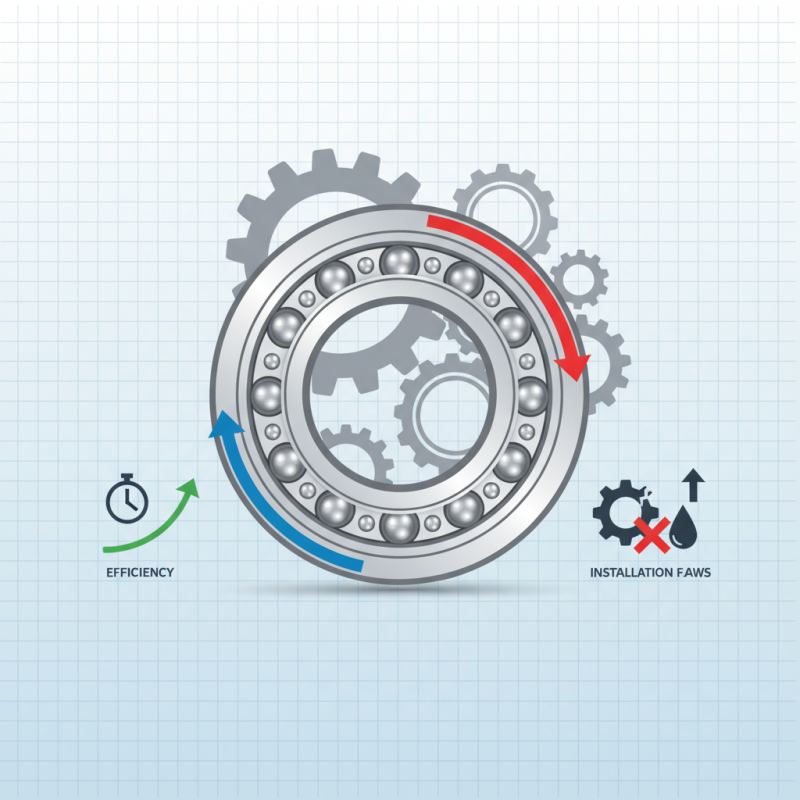
Despite their effectiveness, ball bearings are not without flaws. Poor installation can lead to premature failure. Additionally, they require proper lubrication to operate optimally. This highlights the need for regular maintenance. Ball bearings may seem straightforward, but their performance greatly impacts the efficiency of machinery.
What is a Ball Bearing?
A ball bearing is a crucial component in various machinery and equipment. It reduces friction between moving parts. The design consists of balls enclosed in a ring, known as races. This allows for smooth rotation and less heat generation. In an industry report, it was revealed that ball bearings can reduce friction by up to 80%. This efficiency is vital for high-performance applications.
Ball bearings come in different sizes and materials. Commonly used materials include steel and ceramic. Ceramic ball bearings are lighter and often used in high-speed applications. However, they are more expensive and can be brittle. A trade-off exists between cost and performance. Some users may overlook maintenance. Without proper lubrication, bearings may wear out quickly.
In practice, the effectiveness of ball bearings can vary. Factors such as load, speed, and environmental conditions play significant roles. Heavy loads can affect their lifespan. A study indicated that improper installation can lead to a 30% increase in failure rates. Engineers must ensure correct fitting and alignment to maximize performance. A small oversight can lead to significant costs later.
Ball Bearing Types and Their Load Capacities
History and Evolution of Ball Bearings
The history of ball bearings dates back to ancient times. Leonardo da Vinci sketched designs for rolling elements in the late 15th century. However, the commercial production began in the early industrial era. In 1794, an English inventor patented a design that significantly improved efficiency. This marked the start of mass production, transforming machinery.
By the 20th century, ball bearings became crucial in various industries. Their use in automobiles and aircraft revolutionized transportation. According to a report from MarketsandMarkets, the global ball bearing market is expected to reach USD 59 billion by 2025. The evolution has seen advancements in materials and precision manufacturing techniques. Steel became the standard, but ceramic balls have gained popularity in high-performance applications.
Yet, the development of ball bearings is not without challenges. Quality control remains a concern in many manufacturers. The right materials must be selected carefully. New alloys and composites are being explored. A focus on sustainability also shapes the future. The demand for eco-friendly bearings is rising. As technologies evolve, so must our understanding of efficiency and durability.
How Ball Bearings Function: Basic Principles
Ball bearings are crucial components in many machines. They reduce friction between moving parts. Understanding how they function helps to appreciate their importance. Ball bearings use small spherical balls to maintain space between parts. This design allows smooth movement and minimizes wear.
The basic principle at work is simple physics. When one part rotates, the balls roll along a race. This minimizes direct contact between surfaces. As a result, energy loss from friction decreases. The rotation becomes easier and more efficient.
Proper alignment of the bearings is vital. Misalignment can lead to poor performance and damage.
Tips: Always ensure your bearings are lubricated. Lack of lubrication can cause overheating and failure. Monitor for unusual noises, which might indicate issues. Regular inspections help in preventing larger problems. Remember, even small adjustments can lead to significant improvements in performance.
Types of Ball Bearings and Their Applications
Ball bearings are crucial in reducing friction. They support loads between moving parts. Different types of ball bearings exist, each serving unique functions.
Deep groove ball bearings are the most common. They handle both radial and axial loads. These bearings often appear in electric motors and household appliances. A report by the Global Market Insights suggests that the demand for deep groove ball bearings is expected to grow by 5.5% annually through 2028. Other types include angular contact and self-aligning ball bearings. Angular contact bearings excel in applications with high-speed rotations. They are common in machine tools and automotive components.
Self-aligning bearings can tolerate shaft misalignment, making them useful in conveyors and agricultural machinery. However, selecting the right type is essential. Using the wrong bearing can lead to early wear or system failure. This poses a challenge in industries striving for efficiency. Different applications require different specifications. Careful analysis of loads and speeds is necessary for optimal performance.
What is a Ball Bearing and How Does it Work? - Types of Ball Bearings and Their Applications
| Type of Ball Bearing | Description | Common Applications |
| Deep Groove Ball Bearing | Suitable for radial and axial loads in both directions. | Electric motors, household appliances, and machinery. |
| Angular Contact Ball Bearing | Designed to support high axial loads and radial loads. | Machine tools, automotive applications, and hydraulic pumps. |
| Self-Aligning Ball Bearing | Has two rows of balls and a common concave sphered raceway. | Textile machinery, agricultural equipment, and conveyors. |
| Thrust Ball Bearing | Designed to handle thrust loads, not radial loads. | Gearboxes, rotary tables, and automotive applications. |
| Miniature Ball Bearing | Smaller dimensions for applications with limited space. | Robotics, drones, and watches. |
Benefits of Using Ball Bearings in Mechanical Systems
Ball bearings play a crucial role in various mechanical systems. Their primary function is to reduce friction between moving parts. With smooth rotation, they enhance efficiency in engines, motors, and machinery.
The benefits of using ball bearings are impressive. They allow for smoother movement, which reduces wear and tear. This can lead to longer-lasting equipment. Additionally, they can handle both radial and axial loads, making them versatile. They improve energy efficiency as well. Machines run cooler and quieter with ball bearings.
However, not all setups benefit equally. In some applications, ball bearings might struggle under extreme conditions. They may require regular maintenance to ensure optimal performance. If not properly lubricated, they can wear out faster than expected. It's essential to evaluate the specific needs of the system. This consideration helps in selecting the best bearing type for the job.