
What is Alloy Powder Grader and How Does it Work?

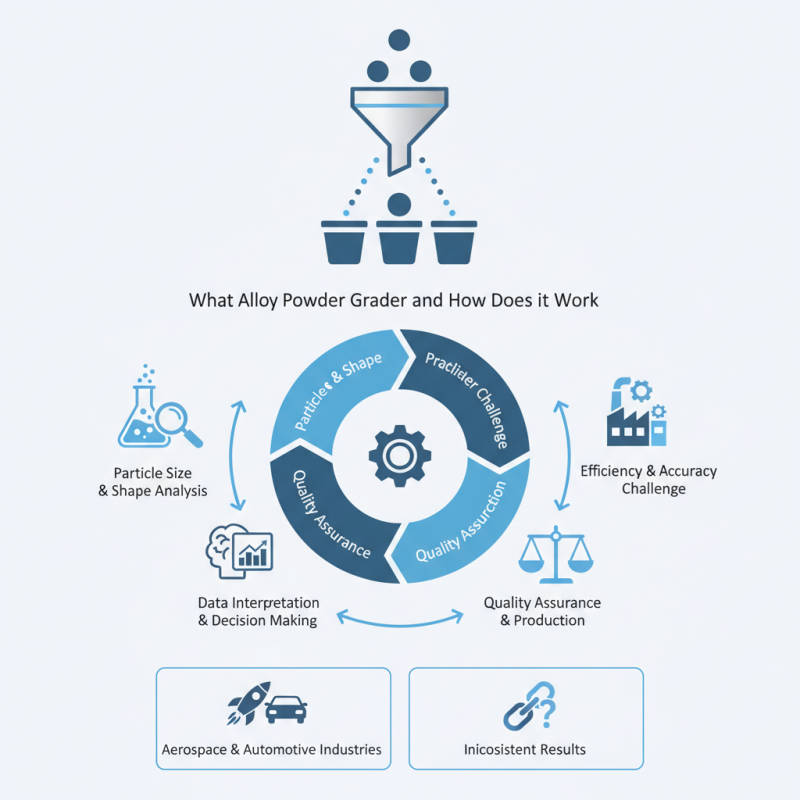
In the realm of advanced manufacturing, the Alloy Powder Grader plays a crucial role. It is designed to assess and categorize metal powders by size, shape, and distribution. This tool ensures that industries receive high-quality alloy materials, which is essential for precision applications. The grading process is vital in sectors like aerospace and automotive.

An Alloy Powder Grader uses various techniques to evaluate powders. It examines particle size distribution and morphology. This data helps manufacturers make informed decisions about the powders they use. However, challenges exist. Not all graders are equally accurate. Sometimes, variations in powder characteristics can lead to inconsistent results.

Understanding how an Alloy Powder Grader functions is key for quality assurance. It not only affects production quality but also influences overall project costs. As industries strive for excellence, refining the grading process remains a work in progress. Balancing efficiency and accuracy is an ongoing challenge.
What is Alloy Powder Grader and How Does it Work?

What is Alloy Powder Grader?

An alloy powder grader is a specialized machine used in the processing of metal powders. It sorts and grades alloy powders based on particle size. This is crucial in industries that rely on precision materials, such as aerospace and electronics. For example, a recent industry report indicated that particle size can significantly affect the performance of metal components. Fine powders typically enhance strength, while coarser powders may improve flowability.

The grading process involves both mechanical and electronic techniques. Sensors analyze the powder characteristics. This helps identify batches that meet specific standards. According to recent studies, accurate grading can lead to a 20% reduction in material waste. This not only saves costs but also ensures higher quality end products.

Tips: Regular maintenance of the grading machine is essential. Clogs and wear can lead to inconsistent grading. Always check calibration on a monthly basis to ensure accuracy.

Additionally, operators must be trained. Misunderstanding grading metrics could result in faulty production. Even small variations can lead to significant issues down the line. Always strive for continuous improvement and feedback in the grading process.

Components and Design of Alloy Powder Grader

An alloy powder grader is essential for quality control in metal powder production. Its primary components include a feed system, grading chamber, and collection bins. The feed system introduces the mixture of metal powders into the grader. The grading chamber separates powders based on size. This process is crucial in ensuring uniformity in particle size.

Each component in the alloy powder grader has its own purpose. The design of the grading chamber typically features screens or classifiers. These elements help in efficiently segregating finer particles from larger ones. However, achieving perfect separation can be challenging. Sometimes the transition between sizes results in mixed batches, which can affect the overall quality.

The collection bins gather the sorted powders. Ideally, they should prevent contamination between different grades. In practice, however, cross-contamination can occur. This issue necessitates regular cleaning and maintenance of the grader. Attention to detail in the design and operation is essential to enhance accuracy in grading. Yet, even with the best setups, inconsistencies might arise, prompting further reflection and improvement in processes.

Principles of Operation for Alloy Powder Graders

Alloy powder graders are innovative machines designed to classify metal powders based on particle size. They function on the principle that different materials will behave differently under specific conditions. The grading process typically involves the use of vibration or airflow to separate particles. This separation helps to ensure consistency in material properties.

The core operation of alloy powder graders relies on the principles of sorting. They utilize a screening system that can be adjusted based on desired specifications. By manipulating vibration frequency and amplitude, one can achieve better separation. Materials with similar sizes can be distinguished effectively this way. However, achieving the ideal settings can be challenging. Test runs are essential to refine the grading process.

**Tip:** Regular maintenance of the grading system is crucial. Dirt or wear can affect performance.

Another key aspect is the calibration of the machine. Incorrect settings can lead to product inconsistency. Inspecting the system periodically helps to avoid these issues. Operators should remain vigilant for signs of imbalance. Adjustments may be needed to maintain accuracy in grading.

**Tip:** Document all adjustments made during operation. This will help in troubleshooting future issues.

Alloy Powder Grader Performance Analysis

This chart illustrates the performance characteristics of different alloy powders in terms of key properties such as particle size, density, viscosity, conductivity, and melting point. The data provides insights into the quality and suitability of various alloy powders for specific applications.

Applications of Alloy Powder Grading in Various Industries

Alloy powder grading plays a vital role in multiple industries. This process ensures that the metal powders meet specific requirements for end-use applications. For example, in the additive manufacturing sector, the size and distribution of power particles can affect the quality of 3D-printed components. Achieving the right particle size can also reduce waste and improve efficiency.

In the automotive industry, alloy powder grading is essential for producing lightweight and durable parts. Manufacturers use graded powders to create components that enhance performance while meeting safety standards. However, inconsistent grading can lead to defects, which might compromise the integrity of the final product. It's a challenge that engineers must navigate carefully.

The aerospace sector relies heavily on precise alloy grading to ensure reliability and safety. Materials used in aircraft must withstand extreme conditions. Any variation in powder size can have significant consequences. The grading process, while beneficial, can sometimes be unpredictable. Continuous refinement and technology integration are needed to enhance accuracy and consistency. This need for improvement prompts ongoing discussions in the industry.

Future Trends in Alloy Powder Grading Technology

The future of alloy powder grading technology looks promising, as advancements continue to reshape the landscape. Recent studies show that the global market for alloy powders is expected to grow at a rate of 7.5% annually until 2026. This growth is driven by industries like aerospace and automotive, which require high-performance materials.

Innovative techniques are emerging in the grading process. For instance, automated grading systems are gaining traction. These systems utilize machine learning algorithms to ensure consistent quality. They analyze particle size and distribution, offering accurate results faster than traditional methods. Yet, challenges remain. Many companies struggle to integrate these technologies fully.

Moreover, sustainability will play a significant role in shaping these trends. Companies are increasingly focusing on recycling and reducing waste in powder production. A recent report indicated that nearly 30% of alloy powders are currently sourced from recycled materials. However, the industry still faces obstacles regarding efficiency and quality assurance in recycling processes. Future developments must address these issues to capitalize on the sustainability trend.