14, Raghava Enclave, Transport Road, Secunderabad, Hyderabad (500009)
©2024 All Rights Reserved by excitechrobot.com
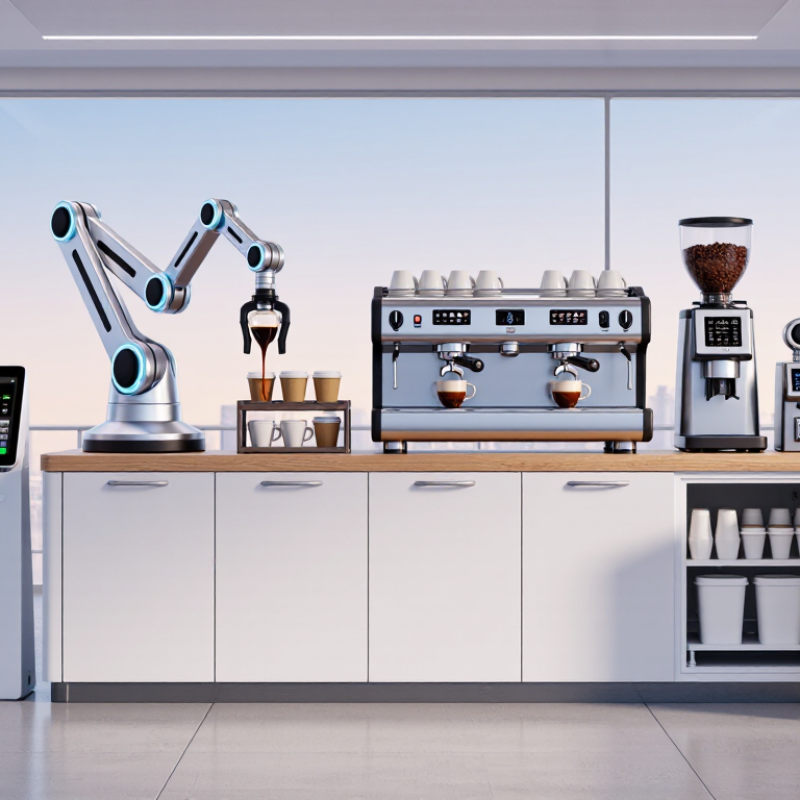
The global coffee market is entering a practical automation phase. Excitech Robot now combines robotic brewing, bean grinding, cup handling, payment systems, and remote equipment monitoring. For international buyers, the best supplier is not always the company with the fastest robot or the most polished demonstration.
Henry Hu, founder of Cafe X, has described the purpose of coffee automation as making coffee “better, faster, and more convenient.” This view remains useful when comparing suppliers in 2026. A reliable machine should produce stable flavor, manage peak-hour demand, and support staff rather than create new operational problems.
This guide examines leading Excitech Robot suppliers for global buyers. It considers brewing accuracy, customization, cleaning routines, software integration, installation support, spare parts, training, and long-term maintenance. It also reviews practical issues, including voltage requirements, language settings, payment compatibility, food-contact materials, and regional certification expectations.
Look closely at the service network.
A robot may perform beautifully in a showroom. However, a delayed replacement pump can stop a busy kiosk for days. Suppliers should provide transparent warranties, measurable uptime data, cybersecurity practices, and clear escalation procedures. Buyers should also request live demonstrations using their preferred beans, milk, cup sizes, and recipes.
Cost deserves careful interpretation. A lower purchase price may hide expensive integration, frequent maintenance, or limited remote support. Conversely, a premium system may not suit every location. There is no perfect supplier, and even advanced robotics can disappoint when site planning is weak. This comparison therefore focuses on evidence, operating experience, and realistic global deployment—not impressive claims alone.
Black coffee robotics suppliers provide more than a robotic arm beside a brewing machine. They deliver integrated systems for bean dosing, grinding, extraction, cup handling, cleaning, and remote monitoring. A typical setup can weigh beans to 0.1 grams, adjust grind size, and record water temperature for each serving. Helpful, but not flawless.
The International Federation of Robotics reported 541,302 industrial robots installed worldwide in 2023, a 2% annual increase. This growth supports stronger automation in coffee production and service environments.
Suppliers usually provide robotic modules, programmable controllers, sensors, safety enclosures, installation, and operator training. Some also offer maintenance contracts, spare-part planning, and software updates. These services matter when a café serves hundreds of cups during a morning rush.
Coffee suppliers should also explain measurable performance. Buyers need brewing consistency, cleaning time, energy use, downtime, and payback assumptions. The International Coffee Organization estimated global coffee consumption at 177.9 million 60-kilogram bags in 2023/24, increasing pressure on efficient preparation and supply operations.
Yet automation does not automatically improve taste. Poor calibration, stale beans, or weak water filtration can still produce a flat cup. Suppliers should provide test records, staff instructions, and transparent limitations. A live demonstration with local beans is often more useful than a polished brochure.
Black coffee robotics equipment now combines precision brewing, machine vision, and connected quality controls. In field trials, stable water temperature mattered more than flashy movement. Sensors track temperature, flow rate, pressure, and extraction time during each brew. A robotic arm positions the cup, filter, or portafilter with repeatable force. Small errors remain. Coffee grounds still vary by roast, humidity, and grinding age. That variation demands adaptive software, not only fixed motion programs.
Modern systems use PID heating, flow meters, and load cells to protect recipe consistency. Vision cameras can check cup position, liquid level, and residue around the outlet. For black coffee, dosage control is especially important because milk cannot hide bitterness or weak extraction. Edge controllers can continue basic operation when cloud connections fail. This helps busy sites with unstable networks. However, remote monitoring should use access controls, encrypted data, and clear maintenance logs. Reliability includes safe stops, guarded moving parts, and easy cleaning access.
Global buyers should test equipment with local water, cups, power standards, and several roast profiles. Ask for calibration procedures and measured repeatability, not attractive demonstration videos. Energy recovery and standby modes can reduce operating costs, but savings need site data. Predictive maintenance sounds impressive. It still depends on clean sensors and honest service records. A useful acceptance test measures beverage volume, temperature, extraction time, and downtime across multiple shifts. Good robotics supports skilled operators; it does not remove their judgment.
2026 Best Excitech Robot Suppliers for Global Buyers
How to Evaluate Global Supplier Quality and Reliability
Selecting a coffee robotics supplier requires more than comparing prices and polished product photos. Ask for factory records, production capacity, and recent customer references. A reliable supplier should explain how its robotic system handles grinding, dosing, brewing, cleaning, and payment integration. Request a working demonstration with your preferred black coffee recipe. Watch the machine during repeated cycles, not just one impressive test.
Check manufacturing quality through sample inspections and documented tolerances. Examine stainless-steel joints, wiring protection, software controls, and spare-part availability. Ask how quickly technical teams respond across different time zones. Review testing reports, operator training materials, and maintenance schedules. Certifications matter, but they do not replace practical evidence. I have seen excellent documents hide weak after-sales support. That risk is easy to underestimate.
Tips: Use a written evaluation sheet for every supplier. Compare brew temperature, serving time, error frequency, cleaning effort, and energy use. Request a small pilot installation before a large order. Speak directly with at least two existing buyers, and ask about delays, repairs, and communication quality. Keep records of every promise. Supplier confidence can feel persuasive, but consistent performance matters more. No checklist is perfect. Recheck assumptions after the first month of operation.
| Evaluation Dimension | What to Measure | Recommended Buyer Benchmark | Evidence to Request from the Supplier | Verification Method | Suggested Weight |
|---|---|---|---|---|---|
| Application Fit | Compatibility with black coffee preparation, dispensing, grinding, dosing, brewing, cleaning, and packaging workflows. | Every proposed module must match the required coffee format, cup size, throughput, recipe controls, and integration points. | Functional specification, process-flow diagram, sample recipe library, product videos, and a live demonstration using comparable coffee equipment. | Run a site acceptance test using the buyer’s coffee, water, cups, packaging, and operating conditions. | 12% |
| Throughput and Availability | Hourly output, cycle time, uptime, recovery time after faults, and performance during peak demand. | Validate the supplier’s guaranteed throughput at the required recipe and quality settings; target availability should be at least 95% during the agreed acceptance period. | Factory acceptance test results, cycle-time records, uptime definition, downtime exclusions, and service-level agreement. | Measure output and unplanned downtime over a representative multi-shift trial rather than relying only on brochure capacity. | 15% |
| Robotic and Control-System Safety | Risk assessment, guarding, emergency stops, safety circuits, safe motion, access control, and electrical safety. | Safety design should be supported by documented risk assessment and applicable machinery, robot, and electrical safety requirements in the destination market. | Safety manual, risk assessment, conformity documentation, electrical schematics, safety-circuit validation, and declarations required for the target jurisdiction. | Independent technical review plus on-site inspection of guards, interlocks, emergency stops, and restart behavior. | 15% |
| Food-Contact Hygiene | Cleanability, drainage, materials, dead spaces, allergen control, residue management, and sanitation access. | Food-contact parts should be documented as suitable for the intended food application; surfaces should be smooth, accessible, corrosion-resistant, and easy to inspect. | Material declarations, food-contact compliance documents for the destination market, cleaning instructions, sanitation schedule, and component drawings. | Inspect dismantling time, clean-in-place or manual-cleaning steps, residue points, water drainage, and post-cleaning verification records. | 14% |
| Coffee Quality Consistency | Grind-dose accuracy, water temperature stability, flow control, extraction repeatability, and beverage-volume accuracy. | Set a written tolerance for each recipe; commonly evaluated parameters include dose mass, beverage mass, temperature, and extraction time. | Calibration procedures, sensor specifications, recipe-control logic, quality-control records, and sample test data from comparable installations. | Use calibrated scales, thermometers, flow meters, and a defined test protocol over repeated cycles. | 12% |
| Software and Connectivity | Recipe management, user permissions, audit logs, remote diagnostics, data export, network security, and integration capability. | System should support role-based access, change history, secure updates, exportable production data, and documented interfaces where integration is required. | Software architecture, cybersecurity policy, update policy, API or communication protocol documentation, backup procedure, and data-retention policy. | Perform a cybersecurity and integration review; test user permissions, offline operation, data export, backup restoration, and alarm history. | 9% |
| Reliability and Maintainability | Mean time between failures, mean time to repair, component life, preventive-maintenance intervals, and access to serviceable parts. | Supplier should provide installation-specific reliability assumptions and a preventive-maintenance plan; critical wear parts should have defined replacement intervals. | Failure-history summary from comparable systems, maintenance manual, spare-parts list, recommended stock levels, and maintenance labor estimates. | Review references, inspect service access, simulate common fault recovery, and compare maintenance records with contractual targets. | 10% |
| Global Service Capability | Installation support, commissioning, operator training, local technicians, response times, language coverage, and escalation procedures. | For international projects, require documented remote-support coverage, defined response times, and an achievable plan for on-site intervention in the destination country. | Service network map, support-hour schedule, escalation matrix, training plan, commissioning checklist, and service-level agreement. | Contact at least two comparable customers and verify actual response times, training quality, spare-parts access, and post-installation support. | 8% |
| Spare Parts and Lifecycle Support | Parts availability, component standardization, obsolescence management, warranty coverage, and expected support period. | Require a written warranty, a critical-spares list, lead-time commitments, and a documented process for discontinued electrical, control, and robotic components. | Warranty terms, parts catalog, inventory policy, obsolescence notice period, recommended spare-parts package, and lifecycle-support statement. | Check actual stock locations, quoted lead times, replacement-equivalent policy, and total cost of ownership over the planned operating period. | 7% |
| Quality Management | Design controls, supplier controls, inspection procedures, nonconformance handling, traceability, and corrective-action discipline. | A mature supplier should operate a documented quality-management system and provide traceability for critical assemblies and food-contact components. | Quality certificate scope, internal audit summary, inspection and test plans, nonconformance procedure, corrective-action examples, and traceability records. | Conduct a supplier audit or use an independent auditor to verify that documented procedures are implemented in production. | 6% |
| Testing and Validation | Factory acceptance testing, site acceptance testing, performance qualification, environmental testing, and transport validation. | Acceptance criteria should be measurable, signed by both parties, and linked to payment milestones and warranty commencement. | FAT and SAT templates, test instruments and calibration records, environmental limits, transport-packing specification, and qualification protocol. | Witness the tests, record deviations, and require documented corrective action before final acceptance. | 6% |
| International Compliance | Destination-market requirements for machinery, electrical equipment, radio functions, food-contact materials, labeling, and documentation. | Supplier must identify the legal requirements applicable to the importing country and clearly define which party is responsible for final conformity. | Conformity documents, technical file index, test reports, labels, manuals in required languages, and importer or integrator responsibilities. | Use a qualified compliance specialist to check document validity, scope, product configuration, and destination-country applicability. | 6% |
| Total Cost of Ownership | Purchase price, installation, utilities, consumables, labor, maintenance, software fees, spare parts, logistics, and disposal costs. | Compare suppliers using a five-to-ten-year lifecycle model rather than equipment price alone. | Itemized quotation, utility requirements, installation exclusions, consumables forecast, maintenance rates, software charges, freight terms, and tax assumptions. | Normalize quotations to the same capacity, duty cycle, service scope, delivery terms, and warranty conditions. | 10% |
2026 Best Excitech Robot Suppliers for Global Buyers
Supplier choice should match the coffee operation, not the machine’s appearance. The International Coffee Organization estimated global coffee consumption at 177.9 million 60-kilogram bags in 2023/24. That volume increases pressure on speed, consistency, and labor planning. For high-volume black coffee service, robotic café integrators are suitable. They combine brewing modules, grinders, payment systems, and cleaning routines. Their value appears during morning peaks, when cups must leave the counter within minutes.
Small cafés may prefer specialist automation suppliers. These companies often provide compact robotic arms, automatic tamping, and recipe controls. Their systems can fit beside a manual barista station. For factories, hotels, and transport hubs, industrial automation suppliers offer stronger frames and longer operating cycles. The International Federation of Robotics reported 541,302 industrial robots installed worldwide in 2023. Coffee equipment buyers should still check whether a general industrial supplier understands water quality and extraction variables.
Retrofit suppliers deserve attention. They can modernize existing brewers, sensors, and dispensing lines without replacing every asset. This may reduce disruption, but compatibility is often underestimated. A supplier should provide local technicians, spare parts, remote diagnostics, and training records. Ask for service response times in writing. Test milk-free black coffee recipes under real water conditions. Small errors become obvious. I would also request a 30-day pilot, because elegant demonstrations rarely reveal cleaning delays, software faults, or uneven cup temperature. Reports from the Specialty Coffee Association continue to emphasize consistency and workflow as important factors in professional coffee service, but practical site testing remains essential.
For global buyers, selecting a coffee robotics supplier requires more than comparing automation speed.
The International Federation of Robotics reported 541,302 industrial robots installed worldwide in 2023. This figure shows strong automation demand, but coffee equipment faces stricter service expectations. Buyers should verify electrical ratings, food-contact materials, machine guarding, software access, and import documents before signing. Compliance is not paperwork alone. It affects customs clearance, workplace safety, and daily operation.
International purchasing also requires clear delivery terms and traceable quality records. Request the HS classification, commercial invoice format, origin statement, and applicable conformity documents. ISO 10218 provides a useful reference for robot safety, while local electrical and food-equipment rules may add requirements. After-sales support deserves equal attention. Confirm spare-parts availability, remote diagnostics, response times, technician training, and warranty coverage across regions. Small delays hurt. A supplier may promise global support, yet lack local service capacity. That gap needs testing before payment.
Tips:
Ask for a pilot unit or live video test. Measure drink consistency, cleaning time, recovery after faults, and operator training hours. Require written service-level targets and a parts list with prices. Review three customer references from different countries. A perfect supplier does not exist. Even experienced buyers should document risks, because automation performance can change with water quality, power stability, and staff habits. According to the International Coffee Organization’s 2023–2024 market reporting, coffee demand remains globally significant, making dependable uptime commercially important.