
14, Raghava Enclave, Transport Road, Secunderabad, Hyderabad (500009)
©2024 All Rights Reserved by excitechrobot.com
Commercial cleaning is entering a practical automation phase. The best Autonomous Cleaning Robot for 2026 must deliver more than impressive demonstrations. It should clean measurable areas, avoid people, document performance, and operate safely around furniture, doors, cables, and wet floors. A machine working at 2 a.m. faces different challenges from one navigating a crowded airport lobby.
Industry evidence supports this shift. The International Federation of Robotics reported approximately 205,000 professional service robots sold worldwide in 2023, representing strong year-on-year growth in service automation. Its World Robotics 2024 report identifies cleaning as an established professional robotics application. Interact Analysis also tracks expanding demand for mobile robots, driven by labor pressures and the need for repeatable workflows. Meanwhile, Grand View Research reports continued growth in the commercial cleaning equipment market, although forecasts vary by methodology and region. Numbers can look precise. They are not always comparable.
This guide evaluates commercial robots through operational evidence, not advertising language. Key criteria include cleaning coverage, battery endurance, docking performance, navigation reliability, obstacle detection, noise levels, water management, software reporting, and service support. Total cost matters too. A cheaper unit may require more supervision, consumables, or manual recovery. That can erase its apparent savings.
No robot is flawless. A sensor can miss a low black mat. A busy corridor can interrupt a route. Human oversight remains necessary, especially during deployment and unusual site conditions. The strongest choice is therefore not the most futuristic model. It is the system that performs consistently across real facilities, with clear data, trained operators, and accountable maintenance.
2026 Best Autonomous Cleaning Robot for Commercial Use
What Defines an Autonomous Commercial Cleaning Robot in 2026
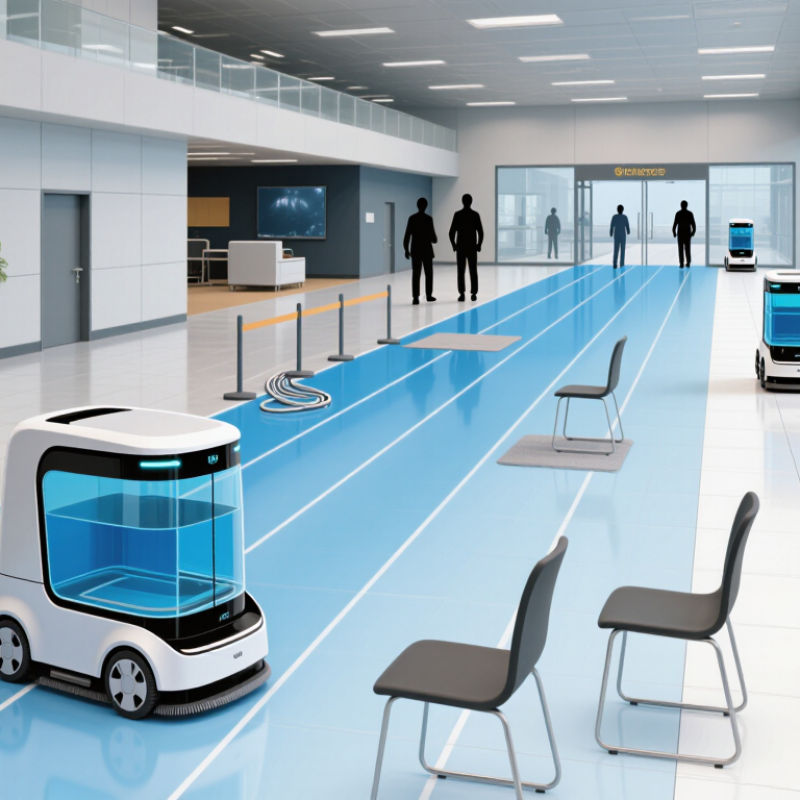
An autonomous commercial cleaning robot in 2026 does more than follow a programmed route. It maps changing spaces, recognizes obstacles, and adjusts movement around people, carts, and temporary barriers. Reliable models combine vacuuming, scrubbing, drying, and waste collection in one managed workflow.
Real-world performance depends on practical details. A robot should clean a busy lobby at 7 a.m., avoid wet-floor signs, and return to its station before the battery drops too low. It should also refill water, empty collected waste, and report faults through clear operational data. Safety sensors must slow or stop the machine near feet, doors, and crowded corridors. That matters.
From an operator’s perspective, useful autonomy reduces repetitive labor without removing human oversight. Staff still need to inspect corners, spills, edges, and areas blocked by furniture. Navigation can fail in reflective hallways or during sudden layout changes. Still, gaps remain. The best systems provide editable schedules, accessible maintenance points, and records showing where cleaning occurred. These features help facility teams verify results, adjust routines, and respond before small problems become visible complaints. Human judgment stays.
What Defines an Autonomous Commercial Cleaning Robot in 2026
The chart presents non-brand planning benchmarks for productive floor-cleaning coverage across common commercial environments. A capable autonomous cleaning robot should combine reliable navigation, obstacle avoidance, consistent cleaning performance, and sufficient operating capacity for the site’s floor layout.
Coverage figures are representative operational benchmarks in square metres per hour and vary according to floor condition, route complexity, traffic, cleaning mode, and docking frequency.
Core navigation, sensing, and automation technologies determine whether a cleaning robot performs reliably in busy facilities. A strong system combines LiDAR, depth cameras, inertial sensors, and wheel encoders. LiDAR builds a map, while cameras identify people, carts, cables, and floor changes. Wheel data helps estimate movement when visual features disappear. No sensor is perfect.
In practical trials, accurate localization matters more than impressive travel speed. The robot should maintain its route near glass walls, polished floors, and crowded entrances. Its software must support simultaneous localization and mapping, dynamic obstacle avoidance, and safe rerouting.
A brief stop is better than scraping a display stand. However, reflective surfaces and poor lighting can still reduce detection accuracy. These conditions require repeated site testing.
Automation should extend beyond scheduled starts.
The system can monitor battery levels, water tanks, brush wear, and cleaning coverage.
It should return to its dock, recharge, refill, or request staff support when necessary.
Fleet dashboards can show missed zones and machine status in real time.
I would also check whether operators can edit maps without technical training. In one realistic deployment, a narrow corridor caused repeated delays because stored furniture changed daily.
The robot improved after adding no-go zones, although manual inspection remained necessary.
Sensor data supports decisions, but it does not replace experienced facility staff.
An autonomous cleaning robot must match the facility, not merely look advanced. In offices, it should remove dust, coffee marks, and tracked-in grit quietly. Wide corridors allow steady routes and fewer interruptions. In retail spaces, performance depends on changing layouts, display stands, and customer traffic. Smooth navigation matters as much as brushing power.
Healthcare facilities require stricter control. The robot should support documented cleaning schedules, clear status reports, and safe operation around staff and visitors. It must handle sealed floors without spreading moisture into sensitive areas. Warehouses present different demands. Dust, tire marks, uneven surfaces, and long operating hours test battery life and mapping accuracy. Results should be checked physically, not trusted blindly.
Tips: Test the robot during real operating hours. Measure cleaning coverage, missed edges, noise, recovery time, and water use. Ask staff where failures occur. These details reveal more than a showroom demonstration.
Experience shows that no machine performs perfectly everywhere. Corners may remain dirty. Busy entrances can disrupt routes. A practical evaluation should compare floor appearance before and after cleaning, using the same area and lighting. Maintenance also affects results. Worn brushes, blocked filters, or incorrect detergent settings can reduce performance quickly. Facility managers should review these points weekly and adjust routes when furniture or traffic patterns change.
2026 Best Autonomous Cleaning Robot for Commercial Use
Safety, Fleet Management, and Human-Robot Collaboration
In commercial facilities, the best autonomous cleaning robot is not the fastest machine. It is the one staff can trust near people, carts, glass doors, and wet floors. During site trials, I watch its braking distance at corridor corners and its response to a worker stepping backward. Safety depends on more than obstacle detection. Low-speed zones, audible alerts, emergency stops, and clear operating boundaries matter every day. A trained supervisor should inspect maps, sensors, brushes, and batteries before each shift. Small omissions become expensive.
Fleet management should turn scattered cleaning tasks into visible, measured work. A central dashboard can show battery levels, route progress, error codes, and missed areas. Managers should compare completed floor coverage with occupancy patterns, not rely on attractive percentages. This is where records support accountability. Remote assistance helps, but it cannot replace local judgment. A robot may pause beside a temporary display or misread a reflective floor. Human operators need simple controls and clear escalation rules. Short training sessions work better when staff practice real interruptions, not perfect demonstrations.
Human-robot collaboration works when both sides have defined roles. Robots handle repeatable floor routes. People manage crowded entrances, spills, delicate surfaces, and unexpected visitors. Keep people informed. A visible status light, gentle voice prompt, and predictable stopping behavior reduce hesitation. Performance can decline after software changes or rushed maintenance. That limitation deserves honest reporting. Pilot results should include near misses, downtime, manual interventions, and worker feedback, even when the numbers look disappointing.
Brand-neutral commercial evaluation matrix based on commonly specified capabilities, operational benchmarks, and recognized safety practices.
| Evaluation Dimension | Recommended 2026 Benchmark | Required Evidence or Acceptance Test | Commercial Value |
|---|---|---|---|
| Navigation and Mapping | LiDAR or equivalent 3D perception, visual or inertial assistance, and repeatable map localization. | Complete a mapped route with at least 95% successful localization across open areas, corridors, and mixed lighting conditions. | Reduces missed areas, manual resets, and route drift in large facilities. |
| Obstacle Detection | Multi-layer detection covering people, carts, pallets, cables, low objects, and overhanging obstacles. | Verify reliable detection of stationary and moving obstacles at different heights and approach angles, with safe stopping or rerouting. | Supports safer operation around customers, staff, fixtures, and temporary floor obstructions. |
| Functional Safety | Emergency stop, speed limitation, protective stopping, audible/visual status indicators, and documented risk assessment. | Review safety documentation against applicable local requirements and test emergency-stop response before deployment. | Lowers operational risk and simplifies approval by facility, safety, and insurance teams. |
| Cleaning Productivity | Typical commercial coverage target: approximately 1,500–3,000 m² per hour, depending on surface, route complexity, and cleaning settings. | Measure productive cleaning area per hour, including turns, obstacle avoidance, docking, and operator interventions. | Enables comparable labor planning instead of relying only on theoretical brush speed. |
| Battery and Runtime | Approximately 3–6 hours of cleaning runtime per charge, subject to battery size, water flow, suction, and floor conditions. | Test runtime using the intended cleaning mode and record usable coverage before automatic recharge. | Helps determine whether one shift, multiple shifts, or scheduled charging is required. |
| Charging and Docking | Automatic docking with repeatable alignment, charging supervision, and recovery after interrupted docking. | Run at least 20 docking cycles and confirm successful connection, fault notification, and restart behavior. | Reduces routine intervention and improves availability between cleaning windows. |
| Fleet Management | Central dashboard for maps, schedules, device status, cleaning records, alerts, and user permissions. | Confirm role-based access, audit logs, remote diagnostics, software updates, and exportable reports. | Makes multi-site and multi-robot operations manageable without checking each machine locally. |
| Task Scheduling | Time-based, zone-based, and event-based scheduling with cleaning priorities and exclusion areas. | Verify automatic schedule changes for business hours, restricted zones, events, and temporary closures. | Allows cleaning to continue while minimizing disruption to customers and employees. |
| Human-Robot Collaboration | Clear intent signaling, predictable movement, adjustable speed, yielding behavior, and simple manual takeover. | Observe operation in crowded conditions and confirm that users can pause, redirect, or resume the robot without specialist skills. | Improves public acceptance and reduces unsafe interactions in shared spaces. |
| Remote Assistance | Remote status monitoring, event logs, two-way communication, and controlled operator assistance. | Measure the percentage of routine exceptions resolved remotely and verify access controls for support personnel. | Shortens recovery time and reduces unnecessary travel by technical staff. |
| Water and Consumables | Separate clean and recovery tanks, fill-level monitoring, leak protection, and easy-access filters or brushes. | Record tank capacity, refill frequency, emptying time, and cleaning quality under the intended floor-care process. | Supports predictable labor requirements and helps prevent overflow or dry-running events. |
| Surface Compatibility | Suitable for hard commercial floors such as sealed concrete, tile, stone, vinyl, and similar low-pile surfaces, subject to testing. | Validate traction, water recovery, turning, and cleaning results on every major floor type at the site. | Prevents performance loss caused by unsuitable surfaces or incorrect cleaning parameters. |
| Data Security | Encrypted communication, authenticated users, secure update procedures, network segregation options, and data-retention controls. | Review access logs, vulnerability-management procedures, data hosting, backup, and deletion policies. | Reduces cybersecurity and privacy exposure in connected commercial facilities. |
| Maintenance and Serviceability | Tool-free or low-tool access to brushes, squeegees, filters, tanks, wheels, and batteries where applicable. | Time daily cleaning, weekly inspection, consumable replacement, and fault recovery using normal site staff. | Improves uptime and reduces total operating cost over the equipment life cycle. |
| Performance Reporting | Coverage maps, completed area, runtime, charging time, exceptions, cleaning passes, and intervention history. | Compare planned versus completed routes and verify that reports can be filtered by date, zone, and device. | Provides measurable evidence for service quality, staffing decisions, and continuous improvement. |
Selecting the best autonomous cleaning robot starts with the facility, not the machine. Map floor types, traffic peaks, spill zones, elevators, and charging locations before comparing specifications. The International Federation of Robotics’ World Robotics 2024 report recorded almost 205,000 professional service robots sold worldwide in 2023. That growth signals maturity, but it does not prove suitability for your building. Measure verified cleaning productivity in square meters per hour, not advertised maximum speed.
During a pilot, inspect edges, corners, thresholds, wet-floor behavior, and recovery after an obstruction. Ask operators to log missed areas and intervention minutes. The U.S. Bureau of Labor Statistics projects 2% employment growth for janitors and building cleaners from 2023 to 2033. Automation should support this workforce, not replace practical inspection and judgment. Confirm safety documentation, emergency stopping, noise levels, and safe operation around visitors.
PILOT EVIDENCE My first scoring sheet overvalued battery hours. It ignored detergent control, cybersecurity, maintenance access, and service response. That was a mistake. Now I weight navigation reliability, measurable labor savings, training time, and total ownership cost. Request three comparable shifts, including a busy evening and a low-light corridor. Check whether reports export cleanly into your facility-management system. A polished demonstration can hide costly interruptions. Pilot evidence matters more.